


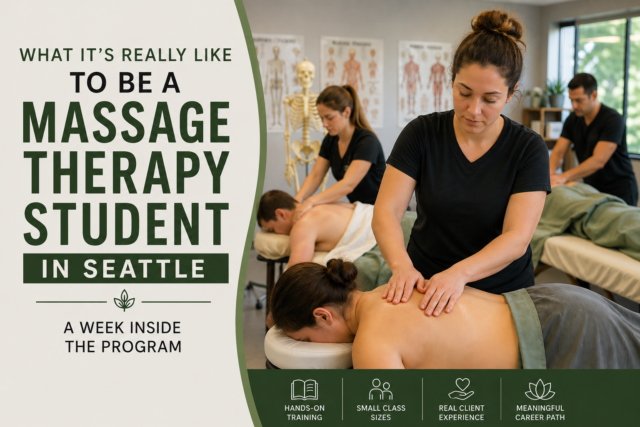
A Week Inside a Massage Therapy Program
If you’re thinking about enrolling in a massage school in Seattle, you’ve probably wondered:
What would my actual week look like?
Not just the classes listed in a massage therapy program, but the real experience. The pace. The people. What it feels like to step into a new career in massage therapy.
So instead of giving you a checklist of courses, here’s a more honest look at what a typical week feels like during massage therapy training at Northwest Academy for the Healing Arts.
Monday: Getting Grounded in the Body
It’s 9:00 AM. You walk into class. It’s not a huge lecture hall. It’s a small group, and people know each other.
Your instructor knows your name.
The morning usually starts with anatomy and physiology, which is a core part of any strong massage therapy program. But it doesn’t feel like memorizing for a test. You’re learning how the body actually works and how common issues show up in real clients.
You start connecting things pretty quickly:
Why certain muscles get tight
How posture leads to pain
How injuries and stress affect the body
Later, you move into assessment. That means learning how to observe posture, ask better questions, and start thinking like a professional in the massage therapy field.
This is usually when it clicks for people:
This is more hands-on and more practical than I expected from a massage school.
Wednesday: Learning Through Practice
Midweek is when things really come alive.
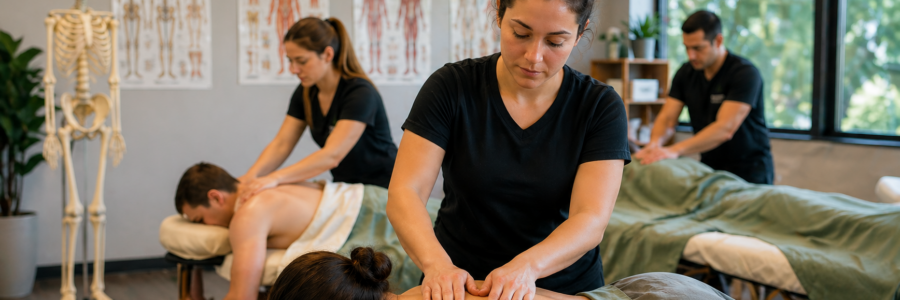
In most massage therapy training programs, hands-on practice is where confidence starts to build. You’re working with classmates, taking turns being on the table and practicing as the therapist.
You work on:
Swedish massage techniques
Basic tissue assessment
Proper body mechanics so you can have a long, sustainable massage therapy career
Your instructor is right there, giving feedback as you go. Small adjustments make a big difference. A shift in pressure, a better angle, a reminder to use your whole body instead of just your hands.
Because the classes are small, you don’t just watch and move on. You get real coaching.
By the end of the day, something starts to feel different.
You’re not just studying massage therapy.
You’re starting to become a massage therapist.
Friday: Working with Real Clients
This is where everything starts to come together.
In student clinic, a key part of most accredited massage therapy programs, you begin working with real clients under supervision.
At first, it can feel like a big step:
Managing time
Communicating professionally
Applying what you’ve learned in a real setting
But it doesn’t take long before something shifts.
You notice your client relaxing.
You feel more confident in your technique.
You see how your work can reduce pain and stress.
For many students, this is when pursuing a massage therapy career becomes real:
I could actually do this for a living.
How the Hybrid Format Fits In
One thing students often appreciate about modern massage therapy training is flexibility.
With a hybrid format, some of the lecture-based coursework is completed online. That gives you the ability to:
Study at your own pace
Review material when you need it
Come to class ready to practice
This is especially helpful if you’re balancing work, family, or a career transition while attending massage school in Seattle.
It keeps things manageable without taking away from the hands-on experience that matters most.
What People Don’t Expect
Almost everyone comes into massage school with certain expectations. And almost everyone is surprised.
Here are a few things students often say:
“I didn’t think we’d start practicing this quickly.”
You begin hands-on work early in your massage therapy training, not months later.
“There’s more science than I thought.”
A strong massage therapy program includes anatomy, physiology, and an understanding of the nervous system and pain patterns.
“This feels more meaningful than I expected.”
Helping people manage pain, reduce stress, and feel better in their bodies is a big part of why people choose a career in massage therapy.
For many students, it’s the first time their work feels truly meaningful.
The People Around You
This part often becomes one of the most important.
In a smaller massage school environment, you actually get to know your classmates and instructors.
You’re learning together. Practicing together. Supporting each other.
Your instructors are involved and invested in your progress. They’re helping you improve your skills, not just moving through a syllabus.
That kind of environment makes a big difference when you’re learning something as hands-on as massage therapy.
How It All Comes Together
Each week builds on the last.
You’re not just learning techniques. You’re developing:
- Practical skills
- Clinical thinking
- Confidence working with real clients
By the time you complete your massage therapy program, you’re not just trained. You’re prepared to begin a professional massage therapy career.
Can You Picture Yourself Doing This?
That’s really the question.
Not just whether attending a massage school in Seattle is the right move, but whether this kind of work feels like something you could see yourself doing every day.
If it does, even a little, the next step is simple.
Come experience it for yourself.
Take the Next Step
The best way to know if a massage therapy program is right for you is to see it in person.
You can:
Reading about massage therapy is helpful.
But being in the room, seeing the training, and experiencing the environment is what really helps you decide.





Massage Therapy: Top 10 Study Skills for Success
 Introduction: Embarking on a journey into the world of massage therapy is an exciting and fulfilling endeavor. As a massage therapy student, you are about to dive into a field that combines science, art, and healing. To make the most of your educational experience and lay a solid foundation for a successful career, it is crucial to develop effective study skills. In this blog post, we will explore the top 10 study skills that will help you excel as a massage therapy student.
- Establish a Structured Study Routine: Creating a structured study routine is essential to maintain consistency and manage your time effectively. Designate specific study hours each day, eliminate distractions, and create a conducive environment for focused learning. This routine will foster discipline and optimize your ability to retain information.
- Set Clear Goals: Clearly define your goals and objectives for each study session. Establishing specific targets, such as mastering a particular technique or memorizing the skeletal system, will give you direction and purpose. Breaking down larger goals into smaller, manageable tasks will make your learning process more manageable and motivating.
- Utilize Active Learning Techniques: Engage actively with the material to enhance comprehension and retention. Instead of passively reading textbooks, employ active learning techniques such as summarizing information in your own words, teaching concepts to others, participating in group discussions, or creating flashcards for key terms and concepts. These activities encourage deeper understanding and better memory recall.
- Develop Note-Taking Skills: Effective note-taking is a fundamental study skill that helps consolidate information and provides a valuable resource for later review. Develop a system that works best for you, whether it’s using handwritten notes, digital apps, or a combination of both. Organize your notes, highlight essential points, and use visual aids like diagrams and mind maps to enhance understanding.
- Practice Hands-On Techniques: As a massage therapy student, hands-on practice is integral to mastering the craft. Regularly allocate time to practice various massage techniques, bodywork modalities, and palpation skills. Seek opportunities to practice on willing friends or family members, and consider joining study groups or attending workshops to refine your skills further.
- Make Use of Visual Resources: Visual aids can be incredibly valuable in understanding complex anatomical structures and physiological processes. Seek out visual resources such as anatomical charts, videos, interactive apps, or 3D models to enhance your understanding. These resources provide a dynamic and engaging way to reinforce your knowledge and grasp challenging concepts.
- Seek Out Multiple Learning Sources: While your course material serves as the foundation, supplementing it with additional learning sources can broaden your understanding. Explore textbooks, scholarly articles, reputable online resources, and journals related to massage therapy. This multidimensional approach exposes you to diverse perspectives and keeps your learning experience engaging and enriched.
- Engage in Self-Assessment: Regular self-assessment helps you gauge your progress and identify areas that require further attention. Create quizzes or practice exams for yourself using your study materials, or utilize online resources designed for massage therapy students. Self-assessment enhances your confidence, highlights knowledge gaps, and guides your future study efforts.
- Take Breaks and Practice Self-Care: While diligent study is crucial, it’s equally important to take breaks and prioritize self-care. Long hours of studying can lead to mental fatigue and decreased retention. Incorporate short breaks during your study sessions, engage in physical activity, practice relaxation techniques, and ensure you get enough sleep. Taking care of your well-being will enhance your overall academic performance.
- Collaborate and Communicate: Learning is often more effective when done in collaboration with others. Engage in study groups or online forums where you can discuss concepts, exchange ideas, and learn from your peers. Communication with instructors, mentors, and experienced professionals can also provide valuable insights and guidance.
Conclusion: Mastering the study skills necessary for success as a massage therapy student is a journey in itself. By establishing a structured routine, setting clear goals, utilizing active learning techniques, and engaging in hands-on practice, you’ll be well on your way to becoming a skilled and knowledgeable massage therapist. Remember to take care of yourself, seek out diverse learning sources, and collaborate with others to enhance your understanding. With these top 10 study skills in your arsenal, you are poised to excel in your massage therapy education and embark on a fulfilling career that promotes wellness and healing.